
Indoor air quality (IAQ) is a global public health issue that affects people regardless of age, geography, or socioeconomic status. As individuals spend up to 90% of their time indoors, pollutant exposure within buildings has a profound impact on respiratory health, cognitive performance, cardiovascular risk, and overall well-being. Yet today, no single cohesive global IAQ standard exists; current guidelines vary widely, leaving governments, integrators, building owners, and the public without consistent, actionable benchmarks.
Our White Paper addresses this critical gap by introducing the Global Open Indoor Air Quality Standards (GO IAQS), a transparent, science-based framework that harmonises pollutant thresholds, strengthens policy direction, and simplifies communication through the GO IAQS Score.
These standards are structured into two tiers:
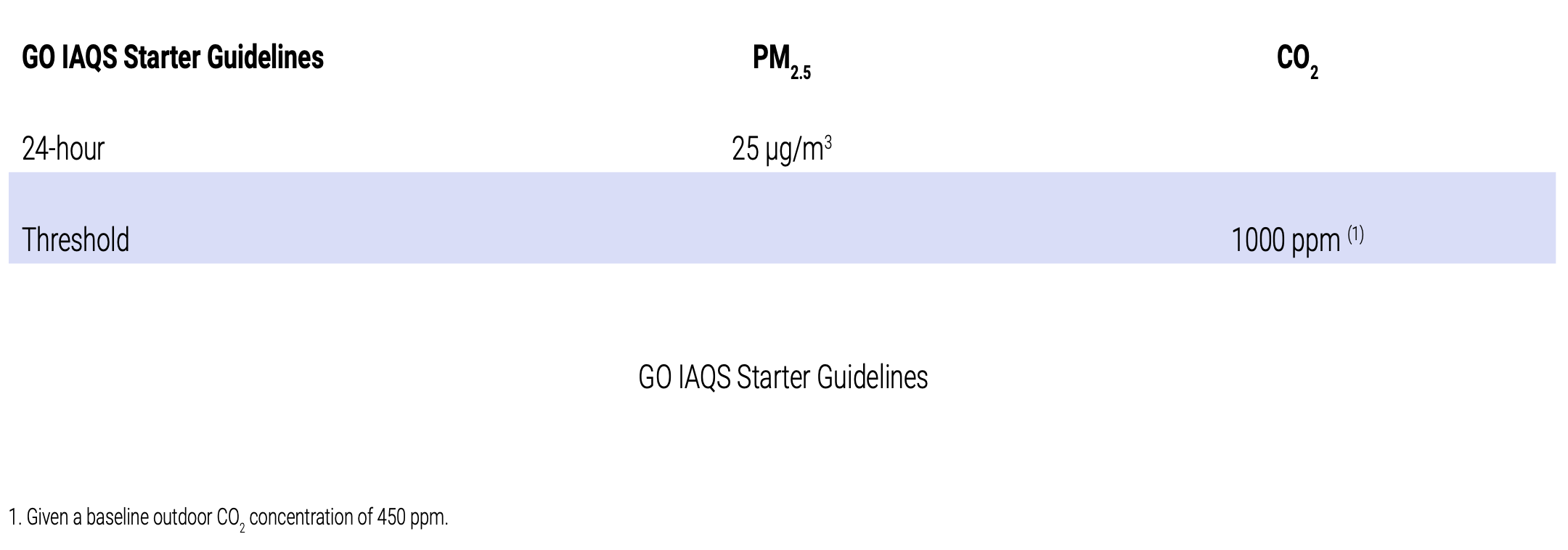
- GO IAQS Starter: Accessible baseline guidelines focused on PM2.5 and CO2, enabling immediate global adoption using widely available low-cost sensors.
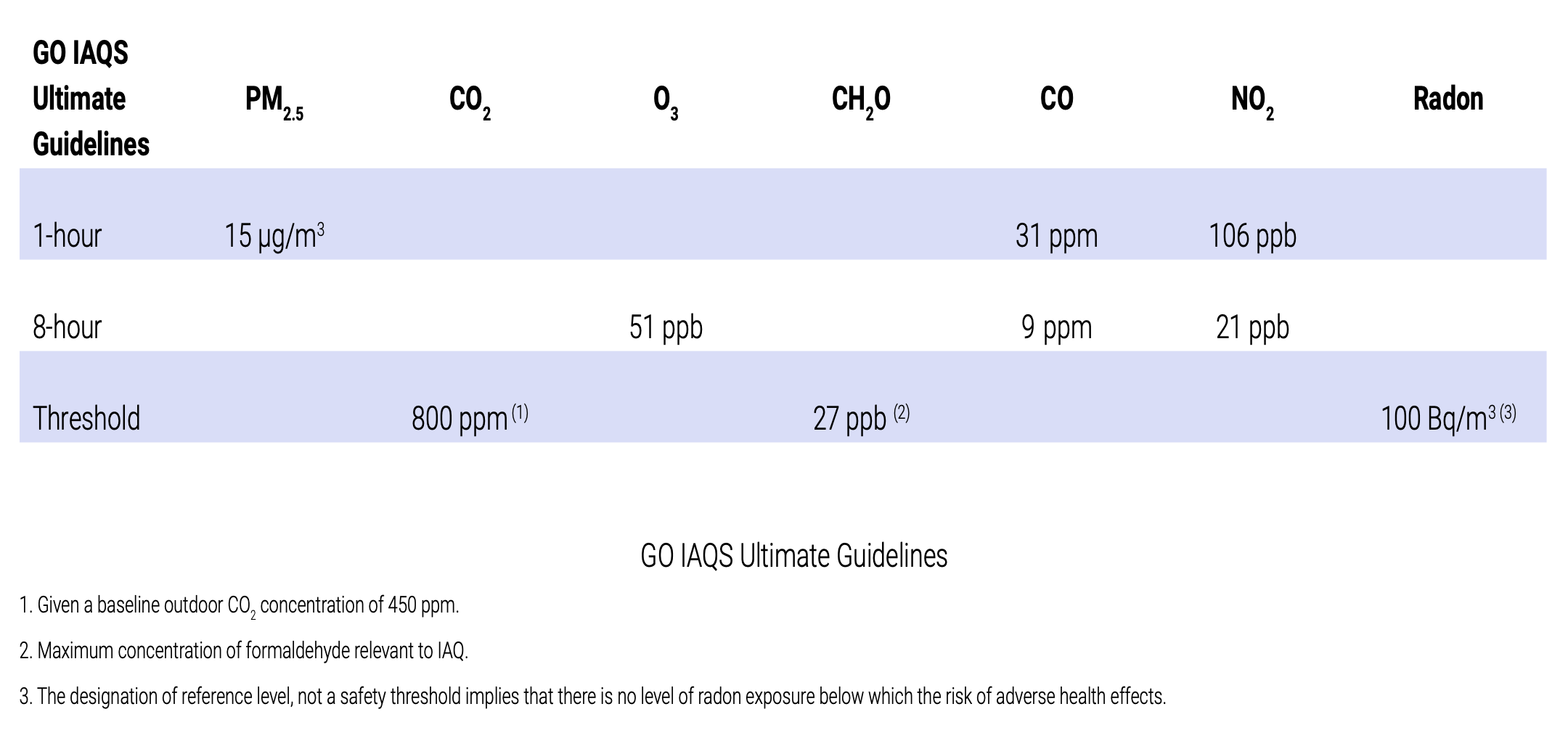
- GO IAQS Ultimate: Advanced, health-protective thresholds covering PM2.5, CO2, O3, CO, CH2O, NO2, and radon, aligned with leading global research and regulatory bodies.
Complementing these standards is the GO IAQS Score, which operates as an inclusive, colour-blind, friendly air quality index, enabling intuitive public communication and empowering individuals to make informed decisions in real-time.
The publication also introduces a comprehensive policy roadmap that identifies essential actions for governments, institutions, and practitioners.
These include coordination frameworks, incentives, monitoring strategies, sector-specific requirements, and public transparency measures.
GO AQS provides a unified vision to elevate global health, guide policy transformation, empower communities, and future-proof buildings in an increasingly polluted world.
 GO AQS