
We are proud to announce the official release of Version 1.0 of the GO AQS White Paper! This milestone signifies a major step forward, as we proudly present the definitive first version of our open and common standards. This latest version incorporates crucial updates and enhancements, solidifying GO AQS’s commitment to transparency, scientific rigor, and practical implementation.
Changelog:
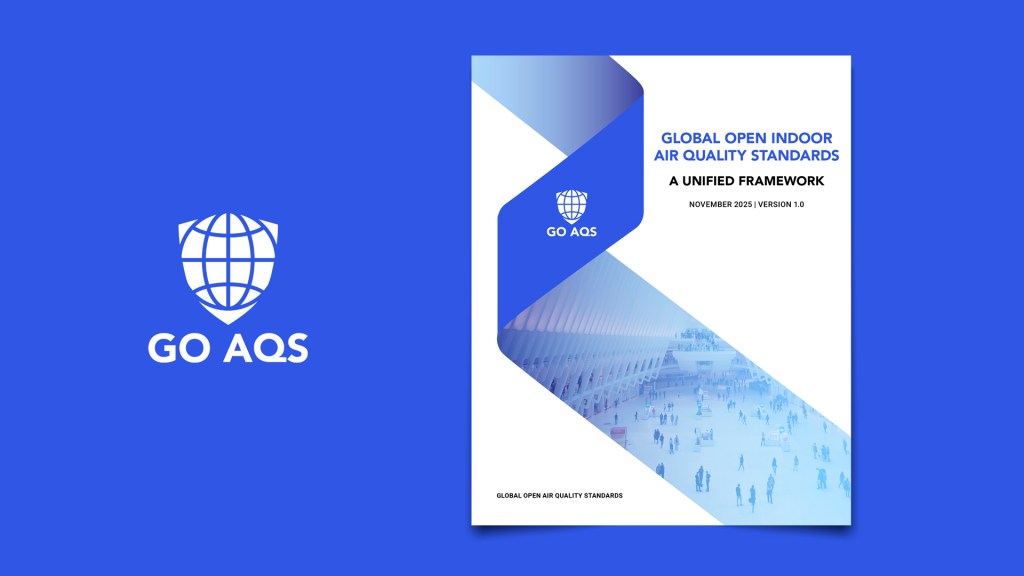
- New Cover: The new cover for the white paper features a simplified, modern design that clearly presents the document’s focus on managing indoor air quality, setting a precise expectation for readers regarding its contents.
- New Sections: Foreword, Executive Summary, Key Findings, Key Recommendations, and Abbreviations
- IAQ Policies: A new section dedicated to Indoor Air Quality (IAQ) policies has been added. This inclusion offers a comprehensive presentation of the various frameworks and considerations governing air quality in indoor environments, reflecting the growing importance of IAQ in public health and regulatory discussions.
- Research Citation on TVOC Limits: To provide a robust, scientifically-backed foundation for our methodology, the paper now includes a research citation on TVOC Limits from Professor Tunga Salthammer. This key addition supports the initiative’s reasoned position on not establishing a single, specific Total Volatile Organic Compounds (TVOC) limit. By referencing cutting-edge research, the paper offers greater scientific transparency and rationale for GO AQS’s flexible and context-aware approach to air quality measurement.
- Good Practices: Version 1.0 emphasizes two essential Good Practices for ensuring high-quality, interoperable air quality data:
- ISO 8601 Timestamp Standard: We now mandate the implementation of the ISO 8601 timestamp standard for all Air Quality (AQ) data output. This global standard ensures consistency, prevents ambiguity, and facilitates seamless data exchange and analysis across different systems and geographies.
- Need for Metadata: The white paper stresses the critical importance of including comprehensive metadata with all air quality measurements. Metadata provides essential context—such as sensor calibration, location, and environmental conditions—which is vital for accurate data interpretation and validation.
- Decarbonization: Improving IAQ and decarbonizing buildings are deeply interconnected goals. Strategies for one can directly impact the other, creating co-benefits.
- External Events: We share recommendations on temporarily adjusting ventilation rates or utilizing portable air filtration units when external events, like wildfires or pollution spikes, significantly impact indoor air quality.
- Updated Member List: The list of contributing team members has been thoroughly updated to reflect recent changes and additions. This ensures the document is current and accurately represents the diverse and growing expertise driving the GO AQS project.
- Minor Text Edits: Numerous minor text edits have been implemented throughout the document to significantly improve clarity, grammar, and overall readability, making the standards easier to understand and adopt.
- Creative Commons Attribution CC BY-NC-SA: This license stands for Creative Commons Attribution-NonCommercial-ShareAlike.
- ISBN: 9798274916158
You will find the latest version of the white paper 📄 on the home page at www.goaqs.org.
If members have any comments about the changes please feel free to contact us.
 GO AQS
Leave a comment